Invisalign® as low as $3,379!

14
Jul
Castlebury Dental
A lingering toothache can quickly ruin an otherwise beautiful day. If your dentist mentions that you need a root canal, your first reaction might be a mix of anxiety and uncertainty. However, this treatment is one of the most reliable and successful procedures in modern dentistry. It is designed specifically to relieve severe pain, halt the spread of bacterial infection, and preserve your natural tooth structure so you can smile, chew, and speak with absolute confidence.
At Castlebury Dental, our experienced dental team, led by Dr. Jacob Brown and Dr. Ashley Hubel, is dedicated to restoring your oral health with gentle, highly efficient treatments tailored to your unique anatomical needs. We utilize advanced diagnostic technology and modern anesthesia to ensure your procedure is as comfortable as it is effective. If you are experiencing persistent tooth pain, do not wait for the infection to worsen; contact us to find out more and take the first step toward lasting relief.
What Is the Success Rate of Root Canal Treatment?
This procedure has an exceptionally high success rate, with clinical studies indicating that between 90% and 97% of procedures are successful. By removing infected tissue and sealing the inner tooth, this therapy preserves your natural tooth structure for years or even a lifetime.
When we evaluate the long-term success of endodontic therapy, we look at both immediate pain relief and the long-term retention of the treated tooth. According to a comprehensive, long-term epidemiological study published by the National Institutes of Health (NIH), approximately 97% of root-canal-treated teeth remain functional and healthy even ten years after the initial procedure.
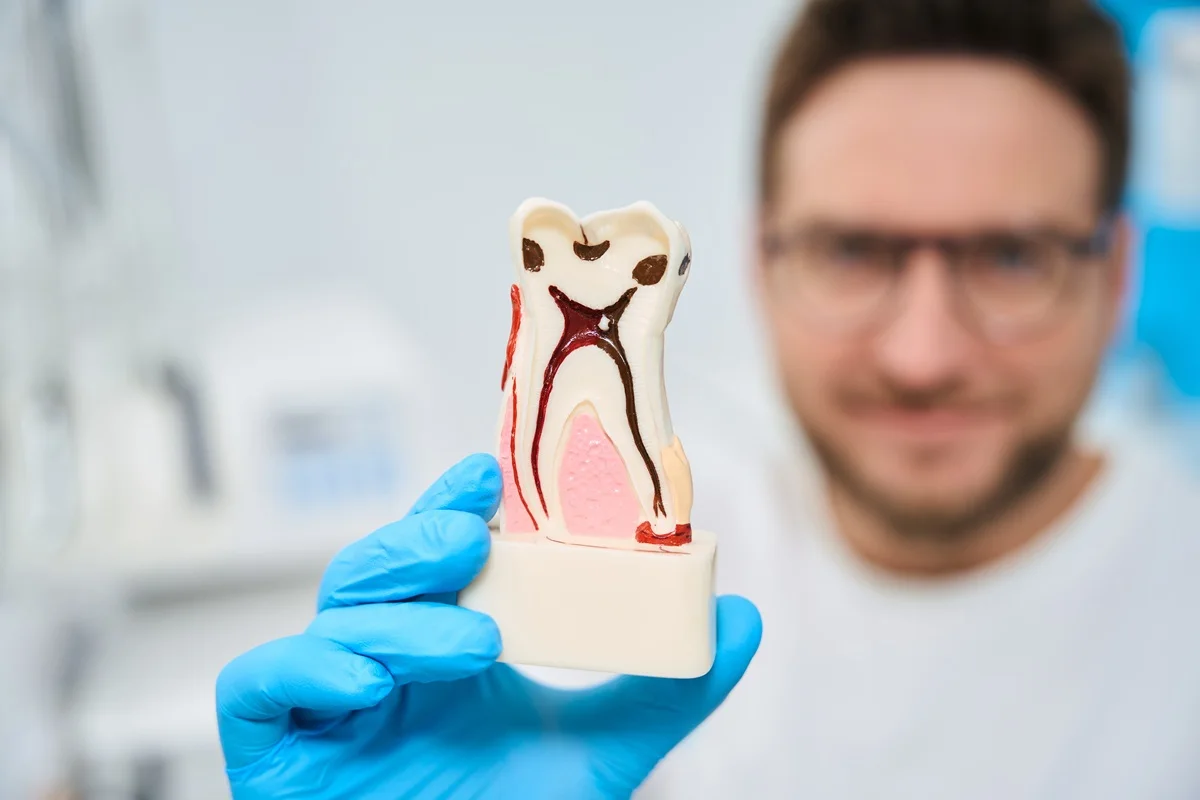
This high success rate mainly results from the comprehensive approach of modern endodontics. The procedure removes the infected or necrotic dental pulp, the soft inner tissue containing nerves and blood vessels, which eliminates the source of infection. Once the internal canals are thoroughly disinfected, they are filled with a biocompatible material called gutta-percha and sealed to prevent future bacterial invasion. By protecting the remaining natural tooth structure, this procedure keeps your jawbone healthy and prevents adjacent teeth from shifting.
Key Factors That Influence the Success Rates of the Treatment
Although the overall statistics are very positive, long-term success relies on key clinical and behavioral factors. Recognizing these elements can guide you in making better decisions about your oral health.
- Timing of Treatment: Addressing an infection early, before it can spread into the surrounding jawbone to form a painful abscess, significantly improves the prognosis.
- The Final Restoration: A root-canal-treated tooth becomes more brittle because it no longer has a blood supply. A high-quality, custom-matched dental crown is essential for protecting the tooth against fractures from everyday biting forces.
- Anatomical Complexity: Human teeth can have complex, curved, or accessory root canals. Achieving success requires a highly skilled clinician who can locate, clean, and seal every micro-canal.
- Your Oral Hygiene Habits: While the treated tooth can no longer develop pulp decay, the surrounding gum tissue and the interface of the protective crown are still vulnerable to plaque buildup and periodontal disease.
If you are experiencing tooth pain, seeking early intervention for a root canal in Eagle is the most reliable way to prevent the infection from spreading and to ensure your tooth has the highest chance of being saved. By consulting with a skilled professional, you can receive a precise diagnosis and a customized treatment plan.
Comparing Treatment Paths: Root Canal vs. Extraction
When a tooth is deeply decayed or infected, patients often ask whether it is better to save the tooth or simply pull it. The table below contrasts these two treatment options:
| Clinical Criteria | Root Canal Treatment | Tooth Extraction & Dental Implant |
| Primary Goal | Preserves the natural tooth structure. | Removes the infected tooth entirely. |
| Anatomical Impact | Maintains natural jawbone stimulation and alignment. | Requires an implant to prevent bone resorption. |
| Recovery Period | Minimal; minor soreness for 2-3 days. | Multi-stage process requiring months of healing. |
| Long-Term Success | 90% to 97% success rate. | Highly successful, but requires bone grafting. |
Choosing a root canal in Eagle allows you to preserve your natural bite. While tooth extraction is sometimes necessary, it requires a replacement like a dental bridge or implant to prevent your remaining teeth from shifting and to protect your jawbone. Preserving your natural tooth through endodontics is almost always the most efficient, gentle, and conservative path to long-term oral health.
Relieving Pain and Restoring Local Lifestyles
A severe toothache does more than just cause physical discomfort; it actively disrupts your daily life. Our patients in the local community know how hard it is to enjoy our beautiful local spots when dealing with dental pain. Whether you are planning a peaceful weekend, looking forward to a morning coffee, or hoping to enjoy a steak, a throbbing tooth can quickly ruin your plans.
Our local climate and active outdoor lifestyle make dental health even more important. Seasonal temperature swings can trigger intense pain in an already inflamed tooth when you breathe in cold air or enjoy hot local meals. Choosing to address this pain promptly restores your quality of life, allowing you to fully enjoy our vibrant local food scene and outdoor activities without discomfort.
What to Expect During the Procedure
Understanding the steps can help ease any anxiety you might feel about the treatment. The process is straightforward, predictable, and focused entirely on your comfort.
- Anesthesia and Comfort: First, the treatment area is thoroughly numbed with a local anesthetic so that you feel no pain during the procedure.
- Accessing the Pulp Chamber: A small access opening is made in the top of the tooth to reach the infected inner pulp.
- Cleaning and Shaping: Using precise endodontic instruments, the infected tissue is carefully removed, and the narrow canals are cleaned and disinfected.
- Sealing the Canals: The cleaned canals are filled with gutta-percha to prevent future bacterial growth.
- Final Restoration: The access opening is sealed with a temporary or permanent filling. In most cases, a custom dental crown is placed during a follow-up visit to restore the tooth’s full strength and appearance.
Visit Castlebury Dental for Gentle, Expert Care
At Castlebury Dental, we believe that high-quality endodontic care should be comfortable, highly effective, and stress-free. If you are experiencing tooth pain, sensitivity, or swelling, we encourage you to visit our dental office at 3209 W. Bavaria St., Eagle, ID 83616 for a comprehensive evaluation.
Do not let tooth pain keep you from enjoying your favorite local activities. Contact us today at 208-855-0080 or click below to book an appointment for a personalized diagnostic evaluation. Our proficient team is here to help you protect your smile, relieve your discomfort, and maintain excellent oral health for life.
FAQs
Modern root canal treatment is not painful because local anesthetics completely numb the area. Most patients report that the procedure feels no different than getting a standard dental filling.
Yes, a root canal can occasionally fail if a new decay develops, the crown cracks, or a canal is missed. If this occurs, the tooth can often be saved through retreatment.
A typical root canal procedure takes between 60 and 90 minutes to complete. Some complex cases involving multiple root canals may require a second visit to ensure thorough cleaning.
Some mild soreness and sensitivity are completely normal for a few days after treatment as the surrounding tissues heal. This temporary discomfort is easily managed with over-the-counter pain relievers.